Creative Spaces For Writers

Creative Spaces

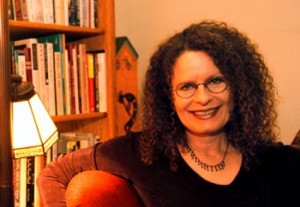
Do you have a special place to write?  Do you have a special routine to prepare yourself for writing?  How does your space affect your writing?  These and more questions have been buzzing around in my head.  I know the answers for myself but I wondered about other writers.  Were they doing something I’m not?  Could I learn from what others do?  Absolutely!  I decided to invite writers to share about how their office space was linked to their creativity or creative process.  Their responses were surprising and informative.  It turns out there’s much more to our workspaces than just office furniture.  As a result, I’ve started a new guest blog series, Creative Spaces, which launches on Friday

writing woman

Do you have a special place to write?

Eleven authors have accepted the invitation to guest blog and if visitors (you) show that they enjoy the series, it may last longer than eleven weeks.  You’ll gain inspiration and maybe some tips.  You’ll certainly get to know some of your favorite authors a little bit more.  Be sure to come back each week to hear about other writers and their creative journeys but especially to take a peek inside their private creative spaces.  


Writing Prompts and Story Cubes

I found a fun and useful writing tool in the form of Story Cubes.  These dice-sized cubes come in a nifty storage box to be taken out when you want a burst of creativity.  Take out four—or five, or as many as you want—cubes and toss them on your table.  Taking only the images that appear on the top of each cube write your poem or story.  The cool thing is an image can mean different things at different times depending on what genre you were planning to write, your mood, and in relation to the other cube’s images. 

Writing Prompts and Story Cubes

There are thousands of possibilities (their box and website says 10,000,000 possibilities).  I’m all for creative play and anything that will shake-up my imagination.  This story generation tool might work for you, too.  I like using them for flash fiction and I imagine poets would have fun with them as well.  Think of them as writing prompts on dice.  There are a couple of versions and there’s even an iPhone app!  I just added them to my growing list of the perfect gifts for writersDo you have a secret writing tool?   I’m eager to hear about it.

Shots on Goal

In honor of hockey season, I thought I’d write about how a popular hockey term relates to writing. In hockey, the phrase shots on goal refers to how many times the players take a shot with the puck to score. I’m of the opinion that, in writing, shots on goal refers to how many times a writer submits her work for publication. That’s kind of obvious. But let’s look a little deeper.

In hockey, in the players’ quest to score, there’s a lot of skating, passing, and fighting. With writing, writers spend their time thinking, plotting, and writing and sometimes fighting in their quest for publication. Where the hockey players have thousands of fans screaming at them if they don’t take shots, writers often have only themselves or critique partners to answer to. But what other difference is there? Well, there is the net itself. That small square with a big guy (goalie) holding a big stick ready to whack the puck, or the opposing player, if either comes near his territory. That net is the goal. That is what every player is aiming for. It doesn’t matter where on the ice the puck goes, the players are continually trying to get it back to the net, to where they can score.

For writers it’s a little more complicated. Our goal is publication, right? But what is preventing us from our goal? Do we have a big guy with a stick standing in front of the mailbox or the send button on our computers? Do we have other mean guys with sticks trying to wipe us out? No. Not usually.

writers tips and hockey

Hockey players know the more times they take good, deliberate shots at the goal, the more chance they have of scoring. Hmmm . . .  Not bad shots. Not wayward shots. Not weak shots. But practiced, strategic shots at their goal. Ever watch a game where your team is not shooting the puck? They could be making great passes, playing awesome defense, creating explosive breakaway opportunities, and then not shoot the puck! What happens? The other team, perhaps not playing as gracefully, will steal it, whisk it down the ice, and take a shot on goal. They do this over and over and finally they score! My favorite team, the Detroit Red Wings, often won games where there were 50 shots on goal and they scored only three points.

Guess what? The other team had 40 shots on goal and scored two points. See how that works?

We’re back to that question of why writers aren’t taking their shots on goal. Are you submitting your work? If you don’t submit your work, you can’t be published. If publication is your goal, you have to take a shot at it. Over and over. And not just  blind shots, but strategic shots—to editors and publishing houses that are a fit for your work. I have a rule to always have something out there under consideration with an editor. Sometimes these editors take forever to reply and I end up with several projects waiting for a response. I find that the more I submit, the more rejections I get (just like hockey players getting denied by the goalie). But at least I’m in the game. At least there’s hope for publication.

A few months ago I realized that I had six projects under consideration. I was excited because I had never done that before. I had six shots on goal. As it turned out, I got one rejection, two are still pending, and three were accepted! So not only did I get more rejections by submitting multiple pieces, but I got more acceptances, too.  Sticking to my rule has made a difference. Every year during hockey season I’m reminded of that rule, and I’m re-inspired to keep taking those shots on goal. I encourage you to give it a try.

A Life Without Pictures by Victoria M. Johnson

“Here is the question: If you could talk to your 16-year-old self, what would you say?  What advice, warnings, or encouragement would you give your younger self?”

A Life Without Pictures by Victoria M. JohnsonMe At Sixteen—A Life Without Pictures

Have your yearbook photo taken.  Even if you can’t afford to buy any for yourself at least it’ll be in the yearbook and there’ll be one snapshot of you in high school.

You know how you hate your uncommon Mexican last name because no one else has it; and you long for an ordinary last name like Rodriguez, Chavez, or Lopez?  Well, guess what?  In a few years you will love your last name for this same reason—because it is rare.  Eventually, you’ll love it because it is who you are.

Don’t worry so much about boys; you’ll end up marrying the man of your dreams.  However, that boy you had a crush on (and never told) will die in a car crash before his 18th birthday—you’ll wish you’d told him.  Maybe, just maybe, your revelation would have delayed him a few hours, or five minutes, or even ten seconds.

It’s one year after your quinceañera and you spend much of your time in activities that aren’t photo-worthy.  You want to be a writer but you think you have nothing to write about.  You will suffer from this self-imposed writer’s block for many years until a creative explosion inside you unleashes a torrent of words and ideas that will keep you up at night.

Your favorite Beatle, George Harrison, will marry a Latina!

Your love of Santana music will never waver; it is in your bones, just as much as mariachi music and The Star Spangled Banner are.

Your interest in Drama, French, and Science will stay with you forever.  Unfortunately, you’ll have to learn math and English the hard way.  In college, many years later, you’ll wish you had never cut these classes in high school.

Sports will always be a part of your life.  Spending three nights a week and Saturday mornings in the tae kwon do studio teaches you lifelong discipline, and so much more.  You’ll exchange martial arts and the field hockey, volleyball, and track for jogging and zumba.  You’ll learn how to swim.

You believe yourself to be strong and in many ways you are.  But you could stand to worry less about what others think about you, to speak up more, and to give your opinion instead of holding it inside.  You’ll learn to open up and this attribute changes everything.

There are a wide variety of college majors—like filmmaking and creative writing!  If only you hadn’t cut school so much you could’ve found out sooner.

I know San Jose is a city you can’t wait to leave.  You fight against being stuck in a rut here.  You resolve to break free, to expand your possibilities.  You can’t wait to turn 17 so you can join the Air Force.  You’ll join when you’re 19 so don’t be in such a hurry.  You’ll meet your future husband, father of your children, and you’ll travel the world together.  (You’ll even adore your in-laws, I swear). And, in time, you’ll think fondly of San Jose.  Crazy, isn’t it?

Here’s something crazier: millions of people will be Star Trek fans.  You won’t have to be embarrassed to admit you’re one, too.

Believe it or not you’ll give birth to two great kids.  A girl and a boy and at least one of them will give you the pleasure of being a grandparent.

You will be asked to, and will attend, a big dance with the high school quarterback, the captain of the football team!  No, not any of those cute jocks you went to school with who never knew you existed.  Your date is someone much more special—your son!

Though your mom will live to age 92, you’ll be devastated when she leaves this earth.  Spend more time with her, before the Alzheimer’s takes her memory.  You’ll spend plenty of time with her after.

You’ll stumble upon a fundraising career.  You’ll greatly enjoy your years in this profession helping nonprofits earn money for worthy causes.

Taking the extra long road, you will become a published author and even a filmmaker.  How cool is that?

It’s true; you only have two pictures of yourself as a child, and none of your adolescent or teen years.  But I assure you; you will have a lifetime of photos, of happy memories.  There’s a thing called scrapbooking—and you will never be caught up—because you are so busy living a full life.

Sure, you’ll make mistakes, use bad judgment, and focus on the wrong priorities.  That’s a part of growing up.  You’ll face challenges, setbacks, and disappointments.  That’s life.  You’ll have your heart broken.  Numerous times.  Know that everything works out the way it’s supposed to.  You’ll be blessed with a loving family of your own, extraordinary friends, and lots of adventure.  And, you’ll learn to trust your writing, each piece a candid photograph of your soul.  Each piece a snapshot of a moment captured in words.

_________________________________________________© 2012 Victoria M. Johnson

This post concludes the special guest blog series. My deepest appreciation goes to all the phenomenal women who participated.  Click on a name below to read each writer’s frank and enlightening words of wisdom—and feel free to post a comment for the author.

Neringa Bryant, Lucille Lang Day, Elizabeth Eslami, Thaïsa Frank, Erica Goss, Parthenia M. Hicks, Lita A. Kurth, Signe Pike,


Elizabeth River Blue Raga by special guest Parthenia M. Hicks

“Here is the question: If you could talk to your 16-year-old self, what would you say?  What advice, warnings, or encouragement would you give your younger self?”

Elizabeth River Blue Raga

“When I was a young poet I was full of fear like a real rat in a corner.” —Pablo Neruda

It’s a hot and sticky place with a river that divides two cities. It’s a humid place with late-blooming azaleas and your hair frizzes even more. You feel like a freak. You cannot see yourself in all of your messy beauty, hair sticking up, fuzzy and kinky, long before gel and soon you are off to straightening and using coke cans to pull the curls out. It works for less than twenty-four hours. You are ashamed of your hair and it is just another way that you feel separate in a white world. I want you to know that not too far in the future, you will love your hair and your looks, although you will be easily thrown off center for a while. Still, let’s just say that you will grow into yourself – your unusual name, your hair that makes both white and black men spit at you. Let’s just say that your hair and your oddly white skin are factors that ignite your fiery passion and you embark on a path of deep connection to the disenfranchised, disrespected and feared. You understand symbolism and metaphor at an early age.

You yearn for something that you cannot name and you take long walks all the way to City Park where the water is dying and the cinnamon colored swings are rusting and you sit by the road and talk to Nannie, our Cherokee grandmother, the one you loved more than anyone in your world. You imagine her serving you tea and devil’s food cake without icing, just the way you like it, and you beg Jesus to bring her back. You promise your soul and later, when you look back, you think it was taken, there by the tombstone under the shaking weeping willow.

This yearning will make up a big part of your inner life, but in just a few years you will be stranded in London with about $ 20 to your name. Your lover will have dumped you and left you alone in another part of the world. In your fear and confusion, you will start walking on this unexpectedly sunny day. You walk and walk and find your way into a tiny bookshop where you are alone for quite a long time except for the soft-spoken Indian man who runs the shop and eventually comes over to you and says gently, “I think I know what you are looking for,” and hands you a copy of the Bhagavad Gita – and not just any copy, but the volume translated by Christopher Isherwood and Swami Prabhavananda, the most beautifully poetic version that you will ever encounter. You hand over most of your money with reverence because you get a wide intuitive hit from this book in your hand and you know that he is right. You will manage to keep this book with you the rest of your life, or, at least until you get to my age. Eventually you discover the source of all that yearning and it helps you with your depression and anxiety more than any psychotropic drug ever could.

You are about to walk into the arms of a lover who is also an abuser, older than your mother, but you won’t be able to recognize the deception and for a long time will think you are in love. Some day, you will know the difference.

This is the year you will leave home for good. You are so eager to run away that you will forget your sisters and brother for a while and it will eat at you. You don’t yet understand that you are not their mother and your guilt at leaving them behind will run like a  river of molten lava through your psyche. You will be shocked one day to find that they don’t remember your care, the way you hid them inside the closet, wrapped your thin fingers lovingly over their mouths to keep them safe. This makes your breath come in shallow, bumpy gulps; you talk in your sleep and your recurring dream of being stranded three thousand miles away in the muggy streets of Portsmouth takes over again.

In the soft shades of evening, you will draw your nightmares and write your stories with a number two pencil—the planes flying over, dropping bombs right there in Alexander Park—carefully erasing the lines and words that don’t belong and when your mother and mine comes in to look, both in awe and fear, you will just say, this is what I want to do, Mama. Our mother will always be proud of you.

I want you to know that you will not kill yourself or your stepfather. You will not save your mother or your siblings. It will take a long time, but you will eventually realize that it wasn’t your job to save anyone. But yourself.

In just a few months you will see yourself in a dream standing next to Robert Frost who is in a wheelchair. You have long, straight blond hair and your image is reflected a thousand times as though you are seeing yourself in a hall of mirrors. One day a therapist will tell you that this is your crippled poet self, seeking to heal, to walk. Somewhere around fifty, Michael Ondaatje will enter your dream, in the long, white coat of a doctor and he will take you seriously and try to heal you. You will find and lose your writing a hundred times, and each time you embrace it, your skin will thicken.

Things that come from the earth and sea—amethyst and peridot, citrine and quartz—will bring you long nights of beading and writing, beading and writing, your own rhythm of language and offering. Your cats will walk the length of your body before settling there and you will soften into sleep together, your own kind of peace and belonging.

As a matter of fact, you will be served by all of the things that now seem to tear you down and frighten you. And when your full spirituality finally blossoms, it will carry you.

You will finally know that you are not too heavy for this world.

__________________________________________________© 2012 Parthenia M. Hicks

Parthenia M. Hicks’ Bio: Parthenia M. Hicks is the Poet Laureate of Los Gatos, CA and the recipient of the Arts Council Silicon Valley Fellowship for Literature in the genre of Short Story. She is the recipient of the Robinson Jeffers Tor House Poetry Prize and the Villa Montalvo Biennial Poetry Prize and has received Pushcart nominations for both poetry and short story. She is a freelance writer and editor with a Masters of Divinity in Kriya Yoga. Parthenia also teaches privately and performs and reads poetry in the Bay Area. Her recent work is featured in The Call: An Anthology of Women’s Writing; Remembering: An Anthology of Poems, and Sweet Obsession: The Art of Lynn Powers. For what seems like centuries, she has been working on two volumes of poetry, One Night She Swallowed the Moon and Apostle Notes as well as a novel, Bone Over Bone. Visit Parthenia at her Red Room page or on Facebook.

Elizabeth River Blue Raga by Parthenia M. Hicks

Parthenia M. Hicks

March Madness and You (Part II)

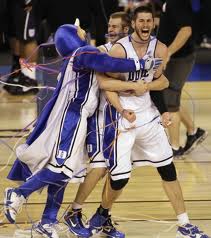
So what does all this March Madness mean to us writers?  Have you ever worked in a situation where every action you took mattered?  Not just your physical actions but also your emotional state of mind mattered too?  Now imagine TV cameras on you, your coach shouting, a ref watching your every move, and a stadium full of screaming fans—half hate you and the other half is rooting for you.  (There’s so much more going on, but I don’t want to get distracted from the topic).  My point is this: these young players come to The Game with a certain amount of training, preparation, mindset, fans who believe in them, and negative forces working against them—just like writers.  And when the whistle blows, it’s all on them.  They either have it or they don’t.  Here’s what they do, and I believe it’s what makes the madness so riveting:

1. They give it everything that they got

2. They don’t leave anything on the table

3. They know they have one shot to show what they’re made of

4. They step it up—they play to the level of the competition

5. They stay focused, brushing off the distractions and setbacks

6. They have a team—they’re not in it alone

What if you only had one shot to show what you’re made of?  Would you write differently?  Would you choose the project you’re working on now?  Are you putting everything you got into your project?  Are you leaving anything inside you that should be on the page—in other words, are you holding back?  Are you still writing for the love of it?  Are you stepping up your game?

March Madness is full of suspense and drama.  Some dreams come true and other dreams are shattered.  But one thing that I admire of all the basketball players is their heart and desire to win.  Every game means something.  If you are lacking enthusiasm and drive, turn on a March Madness game and get caught up in the infectious intensity.  See the fire in the players’ eyes.  Feel the passion and camaraderie.  You can’t help but be inspired.  And ask yourself this: would my game change if I wrote with this kind of relentless intensity?

Click to read Part I

March Madness And You Part II

Duke University March Madness


March Madness and You (Part I)

Ever wonder what all the March Madness hype is about?  Are you surrounded by basketball fans that seem crazed and single-minded? Instead of running in the other direction, I’m suggesting you take a moment to assess what’s at the root of the madness.  I’ll admit I’m one of those fans who may seem possessed at times.  But I think writers (and everyone else) can benefit from a closer study of this annual phenomenon.  Let’s examine the behavior of the basketball players, not the zealous fans, and maybe we can find a way to harness some of this enthusiasm.

First a brief background: As you know, college basketball players don’t get paid to play.  They are there for the love of the game.  (Only a few get scholarships).  By the time we get to the month of March, the regular season is just ending and we go in to conference play.  Everyone vies to win their conference title. Everyone wants to go to the big dance—also known as the sweet sixteen—though nowadays there are more than 64 teams.

As exciting as the conference playoffs are, when it ends is when March Madness begins.  March Madness is the big dance.  It’s where all the television cameras are on.  Teams that never get any airtime have the opportunity to make a name for themselves.  There is the chance that a modest, unknown college can win the title.  These are known as Cinderella teams—teams that come out of nowhere to beat a favored college.  And they don’t just beat one team—they keep on winning, moving up in the bracket.  This possibility is part of what makes the madness exciting.  Fans know it is always possible.  Possible that a team with little hope can pull it together, find their mojo, and win.  It also means a beloved team can lose at any time.  In other words, E-V-E-R-Y game matters! 

Click to read Part II.


March Madness And You

March Madness

Current Works-In-Progress

I just attended a great blogging Meetup with guest speakers from Google.  Wow!  There is a lot to learn about this blogging universe. It’s all very exciting. I’m meeting great people, professional bloggers and would-be bloggers. Some new to it, like me. Everyone is passionate about their topic and eager to share their knowledge and experiences with the world. I’m raring to go but I have a book deadline that I need to concentrate on. Once I turn in my manuscript I’ll be able to join the blogging community in full force.

My current works-in-progress are a grant writing non-fiction book for McGraw-Hill. It’s coming along nicely and I hope this book will help non-profits everywhere make it through these challenging economic times. This project is so important to me that I put my fiction projects aside to give it my full attention. Meanwhile my latest short film project, Still Life, is complete and has been entered in several film festivals. Click on the Still Life links to the right to find out more.