Advice to Myself at Sixteen by special guest Lucille Lang Day

“Here is the question: If you could talk to your 16-year-old self, what would you say? What advice, warnings, or encouragement would you give your younger self?”

Advice to Myself at Sixteen

Dear Lucy,

Believe it or not, you will want to know that the aggregating anemone is green because photosynthetic algae live in its tentacles, that the first William of Orange saved Leiden from the Spanish by flooding the province, that there is a difference between Projectivist and Objectivist poetry, that learning to say “Where is toilet?” in as many languages as possible is a useful skill. What I’m saying is, “Go back to school, the sooner the better.”

Aging is not a disaster, like war or famine, and it certainly beats the alternative. There are far worse things than failing eyesight or white hair.  Still, it’s true that firm, plump breasts and skin that does not hang in lumps are not forever, so don’t create a life and self-image that depend on these things.

If you think you’re in love with a guy you’ve just met at Doggie Diner and haven’t been out with, or even after your first or second date, don’t trust these feelings, no matter how handsome you find him. You’re probably just reacting to his pheromones, in other words, his scent. You must stop kissing guys you’ve just met at parties. Such boldness is not glamorous and does not prove you are irresistible. Most people will assume you are either drunk or a fool.

Spend more time with your parents: go shopping with your mother, watch movies with your dad. In forty or fifty years, you will miss them far more than the man you married at fourteen, the one you will marry at twenty-six and have another child with, or any of the boyfriends you’ll never marry (that you didn’t marry them will one day make you glad). Also spend more time with your daughter. Being a good parent is difficult even for adults, and having had a child at fifteen does not help the matter. If you don’t try harder, at sixteen your daughter will resent you more than you ever resented your own mother or even the vice principal of your junior high.

Also on the subject of children, you can expect to spend more than fifty years with one or more children or grandchildren under eighteen in your life. I know you want to be a writer (and you will!), but the kids will suffer more than your books if you ignore them when they want your attention (the books won’t even care at all if you disappear for a few days). The joy you get from the kids will be an incomparable pleasure, and you will be sorry later if you don’t give them the time they need. So in addition to holing up with the typewriter (later it will be a computer), make plenty of time for playing Candy Land, watching Dumbo, and setting up the miniature horse ranch. The kids will eventually sleep or go off to school, and you will not always be their first choice for a playmate. In a pinch, you can write with one of them on your lap or at your feet.

Romantic love is never easy. It’s nothing like in the movies, but more like a complicated dance you’ll never fully master, although you’ll marry for the last time at fifty-four. Even with this partner there will be stumbles and missteps, but he will give you much more joy than sorrow, so try to recapture the rhythm as long as the music lasts.
Advice to Myself at Sixteen by Lucille Lang DayFrom Your Future with love

_________________________________________________© 2012 Lucille Lang Day
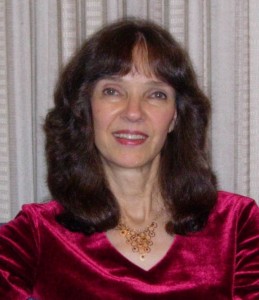
 

Advice to Myself at Sixteen by Lucille Lang Day

Lucille Lang Day


Lucille Lang Day’s bio:  Lucille Lang Day is an award-winning poet and the author of eight poetry collections and chapbooks, most recently The Curvature of Blue (Cervena Barva, 2009). She has also published a children’s book, Chain Letter, and her memoir, Married at Fourteen, will appear from Heyday in 2012. Her poetry and prose have appeared widely in such magazines and anthologies as Atlanta Review, The Hudson Review, The Threepenny Review, and New Poets of the American West (Many Voices, 2010). She received her M.A. in English and M.F.A. in creative writing at San Francisco State University, and her M.A. in zoology and Ph.D. in science and mathematics education at the University of California at Berkeley. The founder and director of a small press, Scarlet Tanager Books, she also served for seventeen years as the director of the Hall of Health, an interactive museum in Berkeley. She lives in Oakland, CA, with her husband, writer Richard Levine. Visit her website at: http://lucillelangday.com.


Sixteen Things I Would Tell my Sixteen-Year-Old Self by special guest Lita A. Kurth

“Here is the question: If you could talk to your 16-year-old self, what would you say? What advice, warnings, or encouragement would you give your younger self?”


Sixteen Things I Would Tell my Sixteen-Year-Old Self

  1. Do you know how beautiful youth is?
  2. There is more to discover looking out the window than in the mirror.
  3. There’s an intellectual word called “agency” and it means our ability to influence our lives. Some say we don’t have any; others, that the entire responsibility is ours. I claim our agency is small, but powerful.
  4. You’ll be so happy to remember the times when, in the midst of narcissistic agony, you were able to think of others.
  5. One day you’ll appreciate your mother, when the bread you bake is nowhere near as good as hers, and you can’t seem to get your canning jars to seal.
  6. One day you won’t have to worry so much about money. You’ll buy a hundred-dollar pair of shoes (but you’ll never take it for granted).
  7. People don’t learn much from what’s spoken through a bullhorn. It might be necessary to speak through a bullhorn, but that’s a rare occasion.
  8. Promoting good is better than fighting evil.
  9. There are wonderful rewarding lives to be lived below the radar, niches upon niches, webs upon webs. Partake.
  10. The extremely memorable moments are not the ones unique to you, but the universal ones: lovemaking, parenthood, natural splendor.
  11. You’ll want to be a mother someday.
  12. You’ll get to be a mother someday.
  13. Small and beautiful dreams can come true. To be a published writer is not out of your reach.
  14. For fifteen years you’ll be a runner, yes, you, my little bookworm.
  15. Commitment is magical, just as Goethe said.
  16. The ability to work continually and consistently may be one of the greatest gifts a person can have. Persistence leaves genius in the dust.
Sixteen Things I Would Tell my Sixteen-Year-Old Self by Lita A. Kurth

Lita A. Kurth

______________________________________________________© 2012 Lita A. Kurth

Lita A. Kurth’s Bio:  Lita A. Kurth teaches Composition and Creative Writing at De Anza College and in private workshops and regularly contributes to Tikkun.org/tikkundaily andTheReviewReview.com. She has published essays, poems, and short stories in NewVerseNews, Blast Furnace, ellipsis…literature and art, the Santa Clara Review, the Exploratorium Quarterly, Tattoo Highway, and Vermont Literary Review as well as erotica (under a pseudonym) in Cleansheets.com and Oystersandchocolate.com. An excerpt of her novel was published as a story, “Marius Martin, Proletarian,” and appears in On the Clock: Contemporary Short Stories of Work (Bottom Dog Press). A work of nonfiction, “Pivot” appears in the 2012 University of Nebraska anthology, Becoming.  Here are two websites where Lita’s work can be found: The Review Review and Tikkun Daily.   She holds an MFA from the Rainier Writers Workshop.

Letter to Myself at Sixteen by special guest Erica Goss

“Here is the question: If you could talk to your 16-year-old self, what would you say?  What advice, warnings, or encouragement would you give your younger self?”


Letter to Myself at Sixteen

I saw you on the street today

eyeliner planting little black seeds

in your tear ducts.

I picture you reading this

in one of your dreams, a jumble

of banned books, torn paper, frayed

blankets and advertising logos

where you work on your future

every rough or delicate detail

like the pieces in a child’s wooden puzzle:

shaped for incremental comprehension.

In this dream I have

your brief attention:

the past cannot be censored

and my archaeology is your future.

I want to protect you, bony girl

warn you away from what dazzles you

snatch the broken glass from your plate

but I’m just another

grown-up woman, creased brow

and a purse stuffed with middle-age

heading home to a quiet house

where paper sacks

filled with outgrown toys

wait by the door.

Letter to Myself at Sixteen by Erica Goss

Erica Goss

____________________________________________________© 2012 Erica Goss

Letter to Myself at Sixteen by Erica GossErica Goss bio:  Erica Goss is the winner of the 2011 Many Mountains Moving Poetry Contest. Her chapbook, Wild Place, was published in 2012 by Finishing Line Press.  Her poems, articles and reviews have appeared in many journals, most recently Connotation Press, Hotel Amerika, Pearl, Main Street Rag, Rattle, Eclectica, Blood Lotus, Café Review, Zoland Poetry, Comstock Review, Lake Effect, and Perigee.  She won the first Edwin Markham Poetry Prize in 2007, judged by California’s Poet Laureate Al Young, and was nominated for a Pushcart Prize in 2010.  Erica is a contributing editor for Cerise Press, and writes a column on video poems for Connotation Press.  She holds an MFA from San Jose State University. Visit her website.

Light Keeping by special guest Signe Pike


Signe Pike’s essay, Light Keeping, has been removed.


Light Keeping by Signe Pike

Signe Pike Bio:  Signe Pike is the author of the critically acclaimed memoir Faery Tale: One Woman’s Search for Enchantment in a Modern World. Her recent collection of poetry—Native Water—was a #1 Kindle Bestseller.


Maps by special guest Elizabeth Eslami

“Here is the question: If you could talk to your 16-year-old self, what would you say?  What advice, warnings, or encouragement would you give your younger self?”


Maps

I’m supposed to tell you I’d hug her.            

Sixteen and she’s swallowed three seasons of the year by a men’s black wool coat that she thinks makes her look mysterious and androgynous, Ally Sheedy in The Breakfast Club or Jimmy Smits in NYPD Blue. Bangs to hide her face, soft plum of a chin, then another chin. Her acne’s bad but it could be worse. A couple of months ago, it dented her cheeks like someone held her face too long.

She’s hiding in the attic, reading, always, or writing plays for movie stars that come back – return to sender – accompanied by lawyer stationery, disclaimers. Mr. Martin has not received or read this material.  It’s hard to think with the engine. Outside, her father’s driving a tractor in circles, chopping and spitting weeds. Her mother wants her to drink more milk.

On her elbows so long her hands go numb. There’s no screen in the attic window and the bees get in, fat and wobbly, and fly around the small of her back, their feathery legs dangling.

She doesn’t want a hug, doesn’t want anyone to touch her. She wants to know the future. Is asking me, ghost of thirty-four, of iPads and crow’s feet and trick knees, about the future.  And so maybe I tell her.

I am sorry to inform you that sixteen is the year someone will throw twenty-three spitballs at the back of your head while you’re in the library reading Norman Maclean’s Young Men and Fire. Twenty-three: you’ll count them. You’ll pretend it’s not happening because you think you deserve it somehow, will wish you were thirty-four and brave and could walk over and tell this person to go fuck himself. But it won’t matter because when you’re thirty-four, you’ll see a photograph of him and he’ll be hunched and bald, wearing sockless loafers, standing on a boat that’s supposed to make up for the fact that his high school years were the best of his life.

You’ll see. Little by little, the bandages will come off.

You’re going to go to college, you’re going to go to New York, you’re going to have sex, you’re going to cry a lot, you’re going to sit on a wet bench smoking cigarettes, watching strangers get married in a park, the bride’s dress sweeping through goose shit. You’re going to talk to your friends on the phone, tell them how miserable you are while snow blows on the foot of your bed. You’re going to put cinnamon in your coffee and you’re going to call your mother and ask her how to make scrambled eggs. You’re going to watch Juliette Binoche in Blue and decide that’s who you want to be, French and beautiful and widowed, wearing a new, more form-fitting black wool coat. You’re going to have a crush on a girl in your D.H. Lawrence class whose cheeks look like apples and cream and you’ll decide you’re a lesbian for three months until you develop a crush on this girl’s boyfriend who has a beard and wears flannel shirts and smells like wilderness. You’re going to be bored and foolish and scared and thrilled. You’re going to, for an indecent amount of time, live on mashed potatoes and bagels.

It’s not going to be what you want because you’re not ready for it. You’re going to be surprised.  This poor girl, she doesn’t even know.

The things you love, the things you hate, will basically be the same in twenty years, give or take. These questions will keep you up at night, irradiating you, a trembling skeleton in the bed. That’s okay, really. Your heart will gush, but you’ll sit up, dip your pen in the blood, and write it all down. You’ll write a whole fucking book.

The things you find funny now – that time rehearsing “Tom Thumb, Tragedy of Tragedies,” when somebody farted, when you squeezed each other into corsets, when you and your best friend were each other’s prom dates, when someone mispronounced a word and it became hilarious in its new incarnation, a word you’d carry around and pull out like a magic trick prompting cackle-laughter and snort-spit – all these things you will forget for a time, scattered and fallow in your skull. But they will come back, buzzing like locusts.

You should thank your teachers. Tell them the truth, that you don’t understand everything – anything – but you know you want to be like them instead of like Juliette Binoche. Stop skulking. Your teachers have given you a gift, and the least you can say is, hey thanks, I’ll remember you. Because you will.

That man you’ve been looking for? You already know him. One day soon, out of the blue, he’s going to call you up and for no reason either of you can understand, you will whisper into the phone for five hours, until your throats hurt and your mother leans through the kitchen and shushes you.  You’ll lose him for a few years, keep bumping into him buying trash bags and talking about books in parking lots. Have you by any chance read – ? Yes. Yes. Yes.  

That your mother was right about the milk.

That terrible things will happen, and beautiful things will happen, and you will live them out but not work them out, for they are the things that pull at you and freckle you and make those parenthesis around your eyes. Dearie, your body is recording your life.

But maybe I won’t tell her any of this, because I don’t believe in straight lines, in inevitability, that there’s a high probability that she will become anyone.  I don’t know what would happen to her, what could happen to her, if she waits five more minutes, takes a different train. There she is now, shapeless and jittery, on a street somewhere, pretending she doesn’t need a map.

Oh hell. Can’t I give her a map?

_________________________________________________ © 2012 Elizabeth Eslami

Maps by Elizabeth Eslami

Elizabeth Eslami


Elizabeth Eslami Bio:  Elizabeth Eslami isMaps by Elizabeth Eslami the author of the novel Bone Worship (Pegasus, 2010).  Her essays, short stories, and travel writing have appeared in numerous publications, including The Millions, The Nervous Breakdown, Matador, and The Literary Review, and her work will be featured in the forthcoming anthologies Not in My Father’s House: An Anthology of Fiction By Iranian American Writers and Writing Off Script: Writers on the Influence of Cinema.  Her story collection, The Hibernarium, was a finalist for the 2011 Flannery O’Connor Award for Short Fiction. She currently teaches at Manhattanville College.  For more information, visit her website at Elizabeth Eslami


Time Loop by special guest Dr. Harrison Solow

“Here is the question: If you could talk to your 16-year-old self, what would you say?  What advice, warnings, or encouragement would you give your younger self?”


Time Loop

If I could talk to my sixteen year old self, I’d be silent. I’m not disposed to dispensing advice. And she isn’t disposed to taking it. Already she has begun to sense the fallibility of the advice dispensers in her life, so she will view me with suspicion. She isn’t happy to see me. I know her. I know all about her. Every single thing she ever thought and did – 100% of her life. She knows but a fraction of mine – nothing beyond what she is at the moment we meet. She feels at a disadvantage.

And I’m no longer what she is…

I look at her, with her Catholic school uniform (plaid skirt, very white shirt and saddle shoes), thin, ink-stained fingers and sunburnt California face, knowing that this is the summer she will spend mostly at the beach, reading 133 books in a mad quest to know everything.

And now she wants to know what will have happened to her by the time she is me-now. I can’t tell her. I can’t tell her a thing, because, the time-space continuum being what it is, if I do, her future might not happen and my sons won’t be born. I will protect their existence over hers. I’m not her mother.

But she doesn’t know about time-space continua. She doesn’t like science fiction and Star Trek hasn’t even aired yet. Her mind is full of Whitman and Eliot, Merton and Woolf. She doesn’t know that she will take Astronomy & Physics at foreign universities or that I will have changed her mind about this magnificent speculative literature – that it will become an enormous part of our life, that sometime in the 1990s, Isaac Asimov, Arthur C. Clarke, Harlan Ellison, most of the Star Trek cast and other icons of that world, will have become her friends and colleagues. She doesn’t know that because of it, she will marry a man whom Variety calls “a Hollywood legend” in that world and beyond.

She doesn’t care, anyway. She wants to be a priest.

That’s the first direct question she asks me – “Am I – uh – are you – or we – a priest?”

I don’t know if it’s okay, in this timewarp, to tell her what hasn’t happened – but I risk it. “No,” I say. “It still isn’t an option for women, even in my now.”

I don’t look at her when I say this, not wanting to reveal by a single twitch of a muscle either what I feel about this; or that her current predilection has undergone considerable alteration in my life; that there are deeper priesthoods in her future.

But when I look up, her face is stricken. Her eyes are swimming with tears. My stomach tightens. My throat constricts.

“You’re sixteen,” I say, finally. “You would have had to have started seminary at eighteen. You didn’t really think the Church’s entire dogma on the priesthood would change in two years, did you?”

It doesn’t sound very compassionate to me, even as I say it, but I remember that shock, that bitterness so well – that day when I was sixteen and someone came to visit me and told me something like that. (Was it an aunt? I don’t remember. Someone who looked like me anyway.) The bitterness must have crept in from memory, changed the sound of my voice…

“I don’t know,” she says, squinting, looking up at the sky, “Maybe.”

I remember then how very young sixteen was then. Much, much younger than now.

Suddenly she says, “Is Brother Joachim okay? I mean in your time? Tell me.”

The intensity of youthful friendships in those faraway days, the loyalty, the honour, return for a moment. Innocence. Joy. I remember her – my  –  beloved Franciscan friar, close my eyes against decades of memory and grief, and nod almost imperceptibly, hoping the universe won’t notice.

She doesn’t press me for a verbal answer, but I see her body relax slightly.

“Do I get to go to university?” she asks. “Do I get a PhD?”

I can’t tell her any more, I say, but this time I tell her why. I tell her that her life won’t be like anything she has yet dreamt; that we are meeting in a brief aberration of time – a Temporal Paradox; and that anything she knows about her future could alter it.

“Then what are you here for?” she asks.

“To talk to you – to give you a little advice.”

“But hasn’t my future already happened?”

“Not for you.”

“Yes, but my future is your past, isn’t it?” she asks.

“Not all of it.”

“Well, up to this point it is,” she answers. “So what advice could you possibly give me that would actually work?”

I look at her squarely, face to face, right into the dark, dark eyes I know so well. It is then I realize what I’m really here for.  I give her the answer she already has:

“None.”

She smiles, then –  a clean, sweet, sad, sixteen year old smile, and turns away.

I begin to retreat into the unstable time vortex that seems to be forming around me but she suddenly turns back, takes my hand – and I return for a moment to hold her to my heart.

“Right,” she says, as I slowly release her into my past. “Because, of the two of us, it’s only your future that can actually change.”

__________________________________________________  © 2012 Harrison Solow

Harrison Solow Bio:

Time Loop by Harrison Solow

Dr Harrison Solow

American writer Harrison Solow has been honoured with multiple awards for her literary fiction, nonfiction, cross-genre writing, poetry and professional writing, most notably winning the prestigious Pushcart Prize for Literature in 2008.  A writer and strategic consultant of rare experience, her work spans Hollywood, Academia, Business, Law and Literature. Harrison Solow is one of the two best-selling University of California Press authors of all time (at time of publication), a Notable Alumna of Mills College where she earned an MFA, and holds the rare distinction of a British PhD in English (Letters) with a critical and creative dissertation “Accepted as Submitted: No Changes” from Trinity Saint David in 2011.

She lectures in English and American Literature, Creative, Nonfiction and Cross Genre Writing, Specific Authors, Science Fiction and American Culture, Professional Writing, Philosophy and Theology at a number of universities, colleges, arts and cultural institutions in the United States, Canada and Great Britain.Time Loop by Harrison Solow

A former faculty member at UC Berkeley, she accepted a lectureship in the English Department of the University of Wales in 2004 and was appointed Writer in Residence in 2008. She returned to America in 2009.

Dr. Solow is a strong proponent of the traditional Liberal Arts, the Fine Arts and the Utilitarian Arts as separate and equally respectable entities, an advocate for Wales and a patron of literary endeavours.

She is married to Herbert F. Solow, the former Head of MGM, Paramount and Desilu Studios in Hollywood and has two sons.

Her latest book is Felicity & Barbara Pym: Amazon and WordPress Page

Harrison Solow is available for interviews, lectures and workshops. She can be reached through her manager, Simon Rivkin at simonrivkin@solowtwo.com

Harrison Solow’s Web pages: Red Room and Academia   Follow Harrison on Twitter: @harrisonsolow and on Facebook

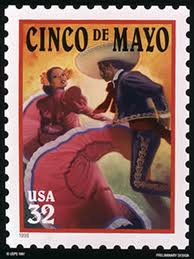
Cinco de Mayo’s 150th Anniversary

Cinco de Mayo—the fifth of May—commemorates the Mexican army’s 1862 victory over France at the Battle of Puebla during the Franco-Mexican War (1861-1867).  And 2012 marks the 150th anniversary of the Battle of Puebla.  Cinco de Mayo is not considered a major holiday in Mexico. However, in the United States Cinco de Mayo has evolved into a celebration of Mexican culture and heritage. Cinco de Mayo traditions include parades, parties, mariachi music, Mexican folk dancing, traditional foods, and street festivals in cities and towns across the United States.

Some mistakenly believe that Cinco de Mayo is a celebration of Mexican independence, which was declared more than 50 years before the Battle of Puebla. That event is commemorated on September 16, the anniversary of the revolutionary priest Miguel Hidalgo y Costilla’s famous “Grito de Dolores” (“Cry of Dolores”), a call to arms that amounted to a declaration of war against the Spanish colonial government in 1810.  Cinco De Mayo celebrates 150th anniversary in 2012

According to David Hayes-Bautista, a UCLA Professor, historian, and director for the Center for the Study of Latino Health and Culture, a fascinating story lies behind Cinco de Mayo.  He told the Huffington Post that as a demographer and epidemiologist, he was investigating why Hispanics, despite having less income and education and meager access to health services, are both less prone to certain diseases and live on average five years longer than non-Latino whites.

“I was investigating the level of health of Latinos during the Gold Rush and the Civil War. But there was no easy way to get that data; until 1880 there were no birth certificates, and until 1896 there were no death certificates,” he said.

The professor turned to Spanish language newspapers from the mid-19th century that served Latino communities in the U.S.  “The news of the Mexican victory over the French Army in Puebla were celebrated, not only immediately after it happened, but every year during the Civil War. That is the origin of why we celebrate the Cinco de Mayo,” said Hayes-Bautista, author of the new book The Cinco de Mayo: An American Tradition.  “Latinos here supported [President Abraham] Lincoln. They supported freedom, and democracy. The French invaded Mexico to remove democracy, and to impose over Mexico a treaty with the Confederation,” he explained.

Let us all continue to support freedom and democracy!  And let us continue to celebrate tradition.

Interesting Children’s books about Mexico and delicious Food Network Cinco de Mayo recipes.


The Doctor’s Dilemma is a Finalist!

The Doctor's Dilemma romance novel I am pleased to announce that my novel and fiction debut, The Doctor’s Dilemma, is a finalist in the 2012 Booksellers’ Best Award. (A Published Author’s Contest for books published in 2011 sponsored by the Greater Detroit RWA)

It finaled in two categories, Best Traditional Romance and Best First Book!  I am thrilled to share this exciting news with you.  The Doctor’s Dilemma, set in rural Mexico, is truly a book of my heart.  It tells the story of a doctor and nurse who work at La Clinica Pediatrica, and the villagers whose lives they touch.  The lead characters have their own personal issues to resolve but they are forever changed by their time in this small village.  I’ll anxiously await hearing the results.

One Novel, Thirteen Authors!

One Novel, Thirteen Authors by Victoria M. Johnson I’m participating in a group novel written by several Avalon Books authors. Each of us is writing one chapter and I think it’s off to a great start.  I was assigned Chapter six and my chapter was posted this week.  Here’s the link to read it.  The idea behind the novel, ALONG FOR THE RIDE, was that each of the thirteen authors would write their chapter after having received the previous chapter.  In other words, a pre-arranged plot did not exist and we had no rules to follow.  Each author is in control of where she takes the story.


I thought it would be a fun and challenging project, so I signed up.  Little did I know what I was in for.  First of all, the Chapter One author, Beate Boeker created great characters, provided an interesting backdrop, and set-up suspense.  The next authors set the tone for a fast-paced romantic suspense story.  As I read each chapter, I gulped.  I expected impressive writing since these were all multi-published authors, but the cliffhangers were getting more and more complicated as the story led to my chapter.  And the style of each author made each chapter wonderfully unique while still maintaining cohesiveness.


Then came Chapter Five by Elisabeth Rose.  Holy, moly can that girl write!  She really stepped up the stakes and I was so pleased to have followed this chapter.  Well, at first I may have said, “No way, how could she do that to me?”  But I gathered my decorum and got to work.  In addition to the creative aspects of the story, I had to deal with the technical elements.  I didn’t want to forget clues that were previously planted, but I obviously couldn’t address all of them in my one chapter.  I had to choose which elements of the story felt right to act upon and which to leave for the next author.  I can honestly say that I enjoyed participating in this project and I look forward to reading the upcoming chapters.

 You can read all the chapters at this link.