The Substitute Bride

The Substitute Bride by Victoria M. Johnson


Mr. and Mrs. Quinn request the honor of your presence to read… Three intertwined short stories that are connected by one surprising wedding. The characters and their stories are sure to captivate your heart. The ebook contains the lead story, The Substitute Bride, as well as The Best Man’s Secret and The Wedding Planner’s Apprentice. You’re invited to… be delightfully entertained!

1 “The Substitute Bride”
Hosting a glitzy wedding is nerve-racking enough, but when glamorous Megan Quinn cons her twin sister Kellie into carrying out an awkward plan, it’s anyone’s guess who will end up in the groom’s arms on his wedding night.

2 “The Best Man’s Secret”
Jeff Tanner’s back in town for his cousin’s wedding to his childhood friend, Megan Quinn. But things just don’t seem right, and Jeff wants to get to the bottom of it. The only problem is–the wedding ceremony has already started!

3 “The Wedding Planner’s Apprentice”
Babysitting a wedding cake should be a simple task for Emma Moore, skilled apprentice at Ana’s Fantasy Weddings, to complete and get on to her special date. But nothing at this wedding goes as planned and the assignment–and Emma–abruptly spiral out of control.

Read an excerpt


Grant Writing 101 The Substitute Bride
The Substitute Bride

The Substitute Bride

Quotes I Like…


Herm Albright quote Positive attitude may not solve all your problems, but it will annoy enough people to make it worth the effort. – Herm Albright

This quote is a favorite of mine.  It says it all, doesn’t it?

The Seagull And Me

Santa Cruz Seagull

Camera shy seagull

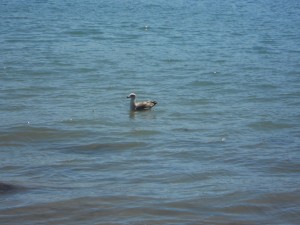
As I walked along the Santa Cruz shore with my camera in hand, I spotted a seagull that seemed as enthralled with the ocean as I.  He stood there staring at the frothy waves and I decided to take his photo.  Stooping down to his level, I brought my camera up but he moved on.  I tried to catch up with him but he walked awfully fast for a seagull.  The faster I walked, the faster he walked.  He looked at me and I looked at him, he knew I was there, and he didn’t let me catch him.  I had to dodge children and adults who were splashing in the waves or walking hand-in-hand.  Whereas, everyone moved out of his way.  I began to feel silly, chasing down a seagull that was clearly outsmarting me.  And, we were running out of shoreline.  I had to make a move.  I knew if I ran I would scare it off, so I walked as fast as I could, camera ready, and snap.  I got his photograph.  Cute seagull, isn’t he?  So much for a relaxing stroll on the beach.  Now I need a margarita, then maybe a nap.

A Life Without Pictures by Victoria M. Johnson

“Here is the question: If you could talk to your 16-year-old self, what would you say?  What advice, warnings, or encouragement would you give your younger self?”

A Life Without Pictures by Victoria M. JohnsonMe At Sixteen—A Life Without Pictures

Have your yearbook photo taken.  Even if you can’t afford to buy any for yourself at least it’ll be in the yearbook and there’ll be one snapshot of you in high school.

You know how you hate your uncommon Mexican last name because no one else has it; and you long for an ordinary last name like Rodriguez, Chavez, or Lopez?  Well, guess what?  In a few years you will love your last name for this same reason—because it is rare.  Eventually, you’ll love it because it is who you are.

Don’t worry so much about boys; you’ll end up marrying the man of your dreams.  However, that boy you had a crush on (and never told) will die in a car crash before his 18th birthday—you’ll wish you’d told him.  Maybe, just maybe, your revelation would have delayed him a few hours, or five minutes, or even ten seconds.

It’s one year after your quinceañera and you spend much of your time in activities that aren’t photo-worthy.  You want to be a writer but you think you have nothing to write about.  You will suffer from this self-imposed writer’s block for many years until a creative explosion inside you unleashes a torrent of words and ideas that will keep you up at night.

Your favorite Beatle, George Harrison, will marry a Latina!

Your love of Santana music will never waver; it is in your bones, just as much as mariachi music and The Star Spangled Banner are.

Your interest in Drama, French, and Science will stay with you forever.  Unfortunately, you’ll have to learn math and English the hard way.  In college, many years later, you’ll wish you had never cut these classes in high school.

Sports will always be a part of your life.  Spending three nights a week and Saturday mornings in the tae kwon do studio teaches you lifelong discipline, and so much more.  You’ll exchange martial arts and the field hockey, volleyball, and track for jogging and zumba.  You’ll learn how to swim.

You believe yourself to be strong and in many ways you are.  But you could stand to worry less about what others think about you, to speak up more, and to give your opinion instead of holding it inside.  You’ll learn to open up and this attribute changes everything.

There are a wide variety of college majors—like filmmaking and creative writing!  If only you hadn’t cut school so much you could’ve found out sooner.

I know San Jose is a city you can’t wait to leave.  You fight against being stuck in a rut here.  You resolve to break free, to expand your possibilities.  You can’t wait to turn 17 so you can join the Air Force.  You’ll join when you’re 19 so don’t be in such a hurry.  You’ll meet your future husband, father of your children, and you’ll travel the world together.  (You’ll even adore your in-laws, I swear). And, in time, you’ll think fondly of San Jose.  Crazy, isn’t it?

Here’s something crazier: millions of people will be Star Trek fans.  You won’t have to be embarrassed to admit you’re one, too.

Believe it or not you’ll give birth to two great kids.  A girl and a boy and at least one of them will give you the pleasure of being a grandparent.

You will be asked to, and will attend, a big dance with the high school quarterback, the captain of the football team!  No, not any of those cute jocks you went to school with who never knew you existed.  Your date is someone much more special—your son!

Though your mom will live to age 92, you’ll be devastated when she leaves this earth.  Spend more time with her, before the Alzheimer’s takes her memory.  You’ll spend plenty of time with her after.

You’ll stumble upon a fundraising career.  You’ll greatly enjoy your years in this profession helping nonprofits earn money for worthy causes.

Taking the extra long road, you will become a published author and even a filmmaker.  How cool is that?

It’s true; you only have two pictures of yourself as a child, and none of your adolescent or teen years.  But I assure you; you will have a lifetime of photos, of happy memories.  There’s a thing called scrapbooking—and you will never be caught up—because you are so busy living a full life.

Sure, you’ll make mistakes, use bad judgment, and focus on the wrong priorities.  That’s a part of growing up.  You’ll face challenges, setbacks, and disappointments.  That’s life.  You’ll have your heart broken.  Numerous times.  Know that everything works out the way it’s supposed to.  You’ll be blessed with a loving family of your own, extraordinary friends, and lots of adventure.  And, you’ll learn to trust your writing, each piece a candid photograph of your soul.  Each piece a snapshot of a moment captured in words.

_________________________________________________© 2012 Victoria M. Johnson

This post concludes the special guest blog series. My deepest appreciation goes to all the phenomenal women who participated.  Click on a name below to read each writer’s frank and enlightening words of wisdom—and feel free to post a comment for the author.

Neringa Bryant, Lucille Lang Day, Elizabeth Eslami, Thaïsa Frank, Erica Goss, Parthenia M. Hicks, Lita A. Kurth, Signe Pike,


Elizabeth River Blue Raga by special guest Parthenia M. Hicks

“Here is the question: If you could talk to your 16-year-old self, what would you say?  What advice, warnings, or encouragement would you give your younger self?”

Elizabeth River Blue Raga

“When I was a young poet I was full of fear like a real rat in a corner.” —Pablo Neruda

It’s a hot and sticky place with a river that divides two cities. It’s a humid place with late-blooming azaleas and your hair frizzes even more. You feel like a freak. You cannot see yourself in all of your messy beauty, hair sticking up, fuzzy and kinky, long before gel and soon you are off to straightening and using coke cans to pull the curls out. It works for less than twenty-four hours. You are ashamed of your hair and it is just another way that you feel separate in a white world. I want you to know that not too far in the future, you will love your hair and your looks, although you will be easily thrown off center for a while. Still, let’s just say that you will grow into yourself – your unusual name, your hair that makes both white and black men spit at you. Let’s just say that your hair and your oddly white skin are factors that ignite your fiery passion and you embark on a path of deep connection to the disenfranchised, disrespected and feared. You understand symbolism and metaphor at an early age.

You yearn for something that you cannot name and you take long walks all the way to City Park where the water is dying and the cinnamon colored swings are rusting and you sit by the road and talk to Nannie, our Cherokee grandmother, the one you loved more than anyone in your world. You imagine her serving you tea and devil’s food cake without icing, just the way you like it, and you beg Jesus to bring her back. You promise your soul and later, when you look back, you think it was taken, there by the tombstone under the shaking weeping willow.

This yearning will make up a big part of your inner life, but in just a few years you will be stranded in London with about $ 20 to your name. Your lover will have dumped you and left you alone in another part of the world. In your fear and confusion, you will start walking on this unexpectedly sunny day. You walk and walk and find your way into a tiny bookshop where you are alone for quite a long time except for the soft-spoken Indian man who runs the shop and eventually comes over to you and says gently, “I think I know what you are looking for,” and hands you a copy of the Bhagavad Gita – and not just any copy, but the volume translated by Christopher Isherwood and Swami Prabhavananda, the most beautifully poetic version that you will ever encounter. You hand over most of your money with reverence because you get a wide intuitive hit from this book in your hand and you know that he is right. You will manage to keep this book with you the rest of your life, or, at least until you get to my age. Eventually you discover the source of all that yearning and it helps you with your depression and anxiety more than any psychotropic drug ever could.

You are about to walk into the arms of a lover who is also an abuser, older than your mother, but you won’t be able to recognize the deception and for a long time will think you are in love. Some day, you will know the difference.

This is the year you will leave home for good. You are so eager to run away that you will forget your sisters and brother for a while and it will eat at you. You don’t yet understand that you are not their mother and your guilt at leaving them behind will run like a  river of molten lava through your psyche. You will be shocked one day to find that they don’t remember your care, the way you hid them inside the closet, wrapped your thin fingers lovingly over their mouths to keep them safe. This makes your breath come in shallow, bumpy gulps; you talk in your sleep and your recurring dream of being stranded three thousand miles away in the muggy streets of Portsmouth takes over again.

In the soft shades of evening, you will draw your nightmares and write your stories with a number two pencil—the planes flying over, dropping bombs right there in Alexander Park—carefully erasing the lines and words that don’t belong and when your mother and mine comes in to look, both in awe and fear, you will just say, this is what I want to do, Mama. Our mother will always be proud of you.

I want you to know that you will not kill yourself or your stepfather. You will not save your mother or your siblings. It will take a long time, but you will eventually realize that it wasn’t your job to save anyone. But yourself.

In just a few months you will see yourself in a dream standing next to Robert Frost who is in a wheelchair. You have long, straight blond hair and your image is reflected a thousand times as though you are seeing yourself in a hall of mirrors. One day a therapist will tell you that this is your crippled poet self, seeking to heal, to walk. Somewhere around fifty, Michael Ondaatje will enter your dream, in the long, white coat of a doctor and he will take you seriously and try to heal you. You will find and lose your writing a hundred times, and each time you embrace it, your skin will thicken.

Things that come from the earth and sea—amethyst and peridot, citrine and quartz—will bring you long nights of beading and writing, beading and writing, your own rhythm of language and offering. Your cats will walk the length of your body before settling there and you will soften into sleep together, your own kind of peace and belonging.

As a matter of fact, you will be served by all of the things that now seem to tear you down and frighten you. And when your full spirituality finally blossoms, it will carry you.

You will finally know that you are not too heavy for this world.

__________________________________________________© 2012 Parthenia M. Hicks

Parthenia M. Hicks’ Bio: Parthenia M. Hicks is the Poet Laureate of Los Gatos, CA and the recipient of the Arts Council Silicon Valley Fellowship for Literature in the genre of Short Story. She is the recipient of the Robinson Jeffers Tor House Poetry Prize and the Villa Montalvo Biennial Poetry Prize and has received Pushcart nominations for both poetry and short story. She is a freelance writer and editor with a Masters of Divinity in Kriya Yoga. Parthenia also teaches privately and performs and reads poetry in the Bay Area. Her recent work is featured in The Call: An Anthology of Women’s Writing; Remembering: An Anthology of Poems, and Sweet Obsession: The Art of Lynn Powers. For what seems like centuries, she has been working on two volumes of poetry, One Night She Swallowed the Moon and Apostle Notes as well as a novel, Bone Over Bone. Visit Parthenia at her Red Room page or on Facebook.

Elizabeth River Blue Raga by Parthenia M. Hicks

Parthenia M. Hicks

Find The Little Girl by special guest Neringa Bryant

“Here is the question: If you could talk to your 16-year-old self, what would you say?  What advice, warnings, or encouragement would you give your younger self?”


FIND THE LITTLE GIRL

FIND THE LITTLE GIRL INSIDE YOU AND DON’T LET HER GO  If I could step back using a time machine, and face that tall, awkward looking teenager with the strange name, I doubt I would offer her any advice. But I am amazed by what she survived…

Besides, getting any advice would infer that you have freedom.  Freedom wasn’t an option. At least not then. Since you are the only sibling old enough and capable enough to accept any responsibility, you run the household.  Plus, you are your father’s daughter and do as you are told, without question. You are the “good” daughter.

At sixteen, you were allowed to wear eyeliner.  According to your parents—or your father, you are now considered a grown-up. Did I ever feel any other way?  I don’t remember.  But home life changed again. It was the year your mother had a lobotomy.  She was schizophrenic, as was your sister. When mom came home from the hospital, this time, she was very quiet.

The entire house became strangely quiet. Your parents stopped arguing for a while. Even the two younger brothers seemed quiet. But the smoke-filled rooms continued, mom was up to three packs a day now.  You were never sure how much your father smoked; he hid in his home office (working?).  We were not allowed inside.

As you spoke to her, you realized that Mom lost the memories of her past, especially when a plane flew over the house– and there were a lot of planes.  This time, she didn’t hide under the table waiting for the bombs to drop, like the ones that dropped around her in Berlin during the war.

What little responsibilities you didn’t have until that point, are now yours.  Except for one.  Doing the laundry.  You were never allowed to touch the washing machine, after the last time when you broke it.  Even though you didn’t totally believe you were at fault– but nobody listened, nobody cared– you took the blame. Maybe that is why you became a bit of a nerd.  Curiosity still draws you into a world of cables, machines and technology.  You are comfortable there, still are…

At every point in your life, decisions are always made for you; you don’t even get to choose whether you take the business or college course in parochial high school.  You never understood why they chose the college course curriculum for you.  College was never an option.  Typing would certainly have come in handy now. You were never a part of the discussion. It was just decided.

At sixteen, the neighbor downstairs got you a job.  You start gift-wrapping at the iconic Filene’s basement and are quickly promoted to cashier due to your strong math skills.  You are excited about getting out of the house. You are surprised that your father allows it, but now you can pay for your school lunches.

You were always a good girl. You did what you were told to do, without question. And as your days continued to be consumed with school, work, household tasks, meals and food shopping (Dad got a DUI and lost his license for a year), you struggle and fail in social studies schoolwork.  A bad mark brought you punishment, without any insight or understanding. In school, the nun’s constant droning offered no help to any subject matter except math, so you entertain yourself with stories, which lived in your head for years, and still do.  They were your salvation, strength and escape.

As was going to the movies…  When you could, you snuck off on Saturday to the local theater and watched the continuous showing of whatever MGM musical was playing.  For a quarter you watched all day and inadvertently studied the film format.

Heaven.

But more freedom was taken away when you were told to give up your extra study class for two years. They were filled with elocution classes; you never questioned your father’s motive. Your mother didn’t care one way or another. You will surmise later that he didn’t want you to be subject to the racism he was experiencing having a heavy accent.

All I can say is that turning eighteen–on what you briefly consider the worst day of your life–another change takes place.  Your father throws you out of the house, claiming, “You’ve outgrown your use…” You find yourself standing at the bus station, with the clothes on your back, no job, and no place to go.  You make a phone call to a new friend who lives close by and she let’s you stay the night.  In spite of the unknown, it was a day of freedom, and the first of many life-changing adventures–good, bad or otherwise.  You not only survive, you flourish.  City life and a new job with a small paycheck quickly throws you back in the stream of life. Strangely, you don’t break; you gain a sense of humor.

A choice, my choice.

For whatever reason, no matter how many times you are kicked around, you manage to have an optimistic attitude. But, incredible as it seems, you will be constantly criticized for it.  It seems many people feel if you are optimistic, then you lack professionalism.  The good news, due to your pragmatic “childhood” very little intimidates you. Even the man you meet, who truly gets you.  He gets you for 44 years.  And your son, well, let’s just say he is your light…

I don’t want to give much away, because you do enjoy the adventure.  Our reliable “old soul” gives us stability, strength and the edge of persistence.  And yes, you resurrected the child–that little girl we never really got to see often or play with–shortly after that day of liberty.  That little kid continues to spark our curiosity, which drives our creativity and originality.  Oh, and that little girl adds a huge dose of magic (technology) to our spirit and soul.  We learn the importance of fun.  It is what makes us special and gives us that feeling of being alive.

I wouldn’t give up either part of us, even wearing the eyeliner, as I continue to ask questions… I discover that there is very little we can’t overcome.  I love my life so much now and it is because of that lonely girl, she taught me how to live.

___________________________________________________© 2012 Neringa Bryant

Find the Little Girl by Neringa Bryant

Neringa Bryant

Neringa Bryant’s Bio:  Neringa Bryant is a Writer, Producer, and Director. Her work includes:  2011, co-writer of a romantic suspense titled, Blood Oil; 2010, Writer, Producer & Director of a kid’s short, Who Murdered Mr. Wrinkles (in post-production).; 2008, Co-writer on Pear Me Up, Buttercup, winner of Best Direction, for the Providence 48 Hour Film Festival produced by Goldilocks Production; Neringa has written over 8 screenplays and produced and wrote Eternal Embrace, winner of 1999 Zoe Film Festival, Best Romantic Film on filmfilm.com produced by Unicorn Shadow Production, her signatory companyShe has worked on ten films in various capacity of co-writer and/or crew. Surrendered Spirit, pilot for a television series titled, The Rogues. won first place in Share the Dream (RWA) contest; 2000-2004 Unit Production Manager, of Shadow Glories (aka The Fight) winner of numerous awards produced by Hamzeh Mystique Films, film sold to Mainline. For more information visit her website.

The Mirror by special guest Thaïsa Frank

“Here is the question: If you could talk to your 16-year-old self, what would you say?  What advice, warnings, or encouragement would you give your younger self?”


The Mirror

Whenever I think of being sixteen, I have an image that doesn’t seem (at first) like the right image for this article because it’s all about appearance. But here it is:

It’s early spring in Pennsylvania: Because of a bout with measles, I’ve lost weight. And–as if my whole body has emerged–my hair, previously unmanageable, has become a long sleek pageboy. I spend hours (and hours) in front of my mirror, admiring the profile I always wanted.

Finally, I am beautiful. And I love being beautiful.  I can even stand my mother’s anger as she looks at my face.

Almost every night I climb out my bedroom window to meet my boyfriend.

Almost every morning I apply eye shadow a few blocks before school.

I also have a secret life under my bed: Books, journals, fashion magazines, make-up.

In my house there’s always yelling and screaming. Sometimes it’s my mother yelling at me and throwing things. Often it’s my parents yelling at each other. Their voices are so raw I hear the scrape of their hearts.

I am wracked by guilt about both of them:

For my mother, who can hardly get a meal on the table.

For my father, who is frightened of everything.

And for both of them, who wanted to be writers, and who hate me because I’m turning out to be that sort of animal.

I don’t want to be a writer. I simply am, against my will, writing my first story at eight, winning prizes at twelve. I have allowed myself a public life as a fiction writer because both of my parents once wrote poetry.  When I’m alone, I write poetry, too.

My secret life under my bed consists of eye shadow, fashion magazines, and an electric razor since my mother, although not a feminist, forbids me from shaving my legs.  There’s also the life of a beginning writer, hidden like a rat with a stolen egg:  Journals where I record my parents’ fights. Books my mother doesn’t understand and that my father (an English professor) resents because he doesn’t quite grasp. (Kafka and Wallace Stevens are next to the eye shadow.) There’s also my own poetry.

My parents expect me to major in English and become a lesser version of my father–going on to teach high school but not for long, because I’ll stop working after I get married.  As for me, I know–without really acknowledging it–that I’ll become a writer.

When it’s time to go to college, I defy all three of us. Instead of English, I major in philosophy of science and learn the incantations of symbolic logic.  I’m less in love with camouflage (I shave my legs in broad daylight and no longer hide my books).  But I remain separate from what everyone–including me–thinks I should be doing. Philosophy helps me understand the breadth and limits of language: but–and to my annoyance–I often read it as a writer, thinking about the limits of language and treasuring a passage in Hume where he leaps out of his philosopher-persona to describe sitting by the fire in his dressing gown. Nothing I’m doing quite fits and I most enjoy staring out the window.  But when I study philosophy in graduate school, I re-read William Blake and decide that philosophy has limits.

I quit school and become a proofreader. At Sports-Illustrated we work until four in the morning and get drunk on scotch.  I ride the subway home to save cab money and defy anyone to bother me. I live in a walk-up in the Village, read my poetry at literary events and start to study Zen. Zen feels right for many reasons, but one important aspect is cultivation in silence–the bedfellow of creative language.

Eventually, I become a therapist–a long road where I help people like my parents feel happier, which begins to ease my guilt about them.  Eventually I teach in graduate writing programs, where I help people who (again like my parents) want to write–except they’re willing to learn from me.

Teaching eases my guilt even more. And one day I realize that I’ve become what I always knew I was, yet for many reasons tried not to be. It happens when I’ve published three books: I’m a writer. After all.

It’s been a zigzag path, interrupted by forays into fashion, and (via the women’s movement) forays away from fashion. It’s been reading Heidegger for a solid week in graduate school and emerging on West End Avenue stoned on his notions of existence and time.  It’s been telling Tarot fortunes at parties, expounding about modal logic.

The path has also been about relationships–some that reified the pain and guilt I felt about my parents and some that were gifts.  Some that held me back and some that pushed me forward.  I also became the mother of an extraordinary son.

So what would I say to this sixteen-year-old, admiring her profile in the mirror, with a copy of Metamorphosis under her bed? I would say almost nothing: Because her tumultuous, painful, ecstatic zigzag path is taking her where she needs to be.

There are two things, though, I would want to tell her:

First: Trust yourself even more than you do. Trust your secret forays into fashion. Trust the books under your bed.  Trust sneaking out the window to see your boyfriend.  Trust the way you hear the ache in your parents’ fights. Trust your forbidden journals. And trust your elaborate camouflage.

Second: Thank you. Thank you for being brave enough to enjoy your image in the mirror. Thank you for your rebelliousness.  Thank you for being true to your path.

____________________________________________________© 2012 Thaïsa Frank

The Mirror by Thaisa Frank

Thaïsa Frank’s Bio:

Enchantment is Thaisa Frank’s third collection of short fiction and includes two semi-autobiographical novellas as well as thirty-three stories. Her most recent novel, Heidegger’s Glasses, takes place in the mythical haven of an underground mine during WWII, the safety of which is threatened by a courageous worker in the Resistance. It was published in 2010, reissued in paperback in 2011 and sold to ten foreign countries before publication.   She is also the author of Sleeping in Velvet and A Brief History of Camouflage, both on the Bestseller List of the San Francisco Chronicle. Thaisa has received two PEN awards and is a three-time Northern California Book Award nominee. Her stories have been widely anthologized–the most recent of which are in A Dictionary of Dirty Words, Harper/Collins Reader’s Choice and Rozne Ksztatly Milocsi.  She has published critical essays on writing and art and wrote the Afterward to Viking/Penguin’s most recent edition of Voltaire.

Thaisa Frank majored in philosophy of science and studied writing alone, turning down fellowships and working as a copy-editor, ghostwriter, and psychotherapist. An interviewer once claimed she also once was a psychic reader; but this was just a rumor, started by one of her characters.  Visit her website at: www.thaisafrank.com

The Mirror by Thaisa Frank

Thaisa Frank


Advice to Myself at Sixteen by special guest Lucille Lang Day

“Here is the question: If you could talk to your 16-year-old self, what would you say? What advice, warnings, or encouragement would you give your younger self?”

Advice to Myself at Sixteen

Dear Lucy,

Believe it or not, you will want to know that the aggregating anemone is green because photosynthetic algae live in its tentacles, that the first William of Orange saved Leiden from the Spanish by flooding the province, that there is a difference between Projectivist and Objectivist poetry, that learning to say “Where is toilet?” in as many languages as possible is a useful skill. What I’m saying is, “Go back to school, the sooner the better.”

Aging is not a disaster, like war or famine, and it certainly beats the alternative. There are far worse things than failing eyesight or white hair.  Still, it’s true that firm, plump breasts and skin that does not hang in lumps are not forever, so don’t create a life and self-image that depend on these things.

If you think you’re in love with a guy you’ve just met at Doggie Diner and haven’t been out with, or even after your first or second date, don’t trust these feelings, no matter how handsome you find him. You’re probably just reacting to his pheromones, in other words, his scent. You must stop kissing guys you’ve just met at parties. Such boldness is not glamorous and does not prove you are irresistible. Most people will assume you are either drunk or a fool.

Spend more time with your parents: go shopping with your mother, watch movies with your dad. In forty or fifty years, you will miss them far more than the man you married at fourteen, the one you will marry at twenty-six and have another child with, or any of the boyfriends you’ll never marry (that you didn’t marry them will one day make you glad). Also spend more time with your daughter. Being a good parent is difficult even for adults, and having had a child at fifteen does not help the matter. If you don’t try harder, at sixteen your daughter will resent you more than you ever resented your own mother or even the vice principal of your junior high.

Also on the subject of children, you can expect to spend more than fifty years with one or more children or grandchildren under eighteen in your life. I know you want to be a writer (and you will!), but the kids will suffer more than your books if you ignore them when they want your attention (the books won’t even care at all if you disappear for a few days). The joy you get from the kids will be an incomparable pleasure, and you will be sorry later if you don’t give them the time they need. So in addition to holing up with the typewriter (later it will be a computer), make plenty of time for playing Candy Land, watching Dumbo, and setting up the miniature horse ranch. The kids will eventually sleep or go off to school, and you will not always be their first choice for a playmate. In a pinch, you can write with one of them on your lap or at your feet.

Romantic love is never easy. It’s nothing like in the movies, but more like a complicated dance you’ll never fully master, although you’ll marry for the last time at fifty-four. Even with this partner there will be stumbles and missteps, but he will give you much more joy than sorrow, so try to recapture the rhythm as long as the music lasts.

Advice to Myself at Sixteen by Lucille Lang DayFrom Your Future with love

_________________________________________________© 2012 Lucille Lang Day


Advice to Myself at Sixteen by Lucille Lang Day

Lucille Lang Day


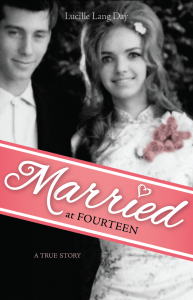
Lucille Lang Day’s bio:  Lucille Lang Day is an award-winning poet and the author of eight poetry collections and chapbooks, most recently The Curvature of Blue (Cervena Barva, 2009). She has also published a children’s book, Chain Letter, and her memoir, Married at Fourteen, will appear from Heyday in 2012. Her poetry and prose have appeared widely in such magazines and anthologies as Atlanta Review, The Hudson Review, The Threepenny Review, and New Poets of the American West (Many Voices, 2010). She received her M.A. in English and M.F.A. in creative writing at San Francisco State University, and her M.A. in zoology and Ph.D. in science and mathematics education at the University of California at Berkeley. The founder and director of a small press, Scarlet Tanager Books, she also served for seventeen years as the director of the Hall of Health, an interactive museum in Berkeley. She lives in Oakland, CA, with her husband, writer Richard Levine. Visit her website at: http://lucillelangday.com.